When to Test After Unprotected Sex: STI and HIV Timing in Nairobi

Some steps can't wait: HIV-prevention medicine has to start within 72 hours. Tests for sexually transmitted infections (STIs), on the other hand, need time before they can find an infection. Here is what to do now, and when each test gives a reliable result.
- Same-day doctor consultation
- Private and confidential
- Walk-ins welcome
The short answer
- Within 72 hours: PEP for HIV and, if pregnancy is possible, emergency contraception.
- From 2 weeks: tests for chlamydia and gonorrhoea are reliable.
- At 4 weeks: tests for trichomonas and Mycoplasma genitalium (M. genitalium) are reliable. Repeat your HIV test if you had one soon after sex.
- At 3 months: final blood tests for HIV, syphilis and hepatitis B.
- Symptoms? Don't wait. See a doctor and test now.
Your testing timeline after sex
Each test needs time before it can find an infection, so testing too early can give a false "all clear". If you're worried now, test now, then test again at the right time.
- Act now
- Reliable result
- Most infections show; test again later if negative
- Test again
-
0 to 3 days: Act now
- PEP for HIV, after a quick HIV test
- Emergency contraception, if pregnancy is possible
-
2 weeks: First swab and urine tests
- Chlamydia and gonorrhoea: reliable
- Trichomonas and M. genitalium: most infections show
-
4 weeks: Full swab and urine tests, and HIV again
- Trichomonas and M. genitalium: reliable
- HIV: repeat your test if you had one soon after sex, as Kenya's national guidelines advise
-
6 weeks: Blood tests start to find most infections
- HIV lab blood test that checks for both antigen and antibodies: reliable, unless you took PEP
- HIV rapid test, syphilis and hepatitis B: most infections show
-
3 months: Final blood tests
- HIV rapid test, syphilis and hepatitis B: reliable
- HIV after PEP: final test at 12 weeks
Fewest visits: come at 4 weeks for swab and urine tests plus an HIV test, then at 3 months for blood tests. Platinum (KES 30,000) covers everything at the 4-week visit, but its syphilis and hepatitis B results aren't final until the 3-month blood tests, which Bronze (KES 5,000) covers.
Herpes is different: test when you have a sore. Our lab HIV test (KES 2,200) is a fourth-generation test that checks for both antigen and antibodies, so it can give a reliable result from 6 weeks, or 12 weeks if you took PEP. More on HIV in our guide to HIV testing in Nairobi.
Why testing too early can miss an infection
After an infection, the germ, or your body's response to it, needs time to build up to a level a test can detect. Before then, a result can be negative even if you're infected. This gap is called the window period, and it is different for each test.
Which kind of sex can pass on what
The kind of sex you had also decides which samples we take.
Vaginal sex
HIV risk: lower than anal sex
- Chlamydia
- Gonorrhoea
- Trichomonas
- M. genitalium
- HIV
- Syphilis
- Hepatitis B
- Herpes
- Human papillomavirus (HPV)
Anal sex
HIV risk: highest, especially for the partner being penetrated
- Chlamydia
- Gonorrhoea
- M. genitalium
- HIV
- Syphilis
- Hepatitis B
- Herpes
- HPV
An infection in the rectum can be missed by a urine test.
Oral sex
HIV risk: very low
- Gonorrhoea
- Chlamydia
- Syphilis
- Herpes
- HPV
An infection in the throat can be missed by a urine test.
Skin-to-skin contact
HIV risk: none if no body fluids are involved
- Herpes
- Syphilis
- HPV (genital warts)
A condom can't protect skin it doesn't cover.
Condom broke or slipped? Treat it as sex without a condom.
Where we take your samples
Throat swabIf you gave oral sex. Ask for it at your visit; it isn't part of the standard packages.
Urine or genital swabIncluded in our swab and urine test packages.
Rectal swabNot available at our clinic. If you were penetrated anally, get a rectal test at a clinic that offers one.
Blood testHIV, syphilis and hepatitis B, whatever kind of sex you had.
Already tested? When to test again
| If… | Test again |
|---|---|
| You tested for chlamydia or gonorrhoea less than 2 weeks after sex | At 2 weeks or later |
| You tested for trichomonas or M. genitalium less than 4 weeks after sex | At 4 weeks |
| Your HIV test soon after sex was negative | 4 weeks after that test, then a final test 3 months after sex |
| You took PEP | At 28 days and again at 12 weeks |
| You tested for syphilis or hepatitis B before 12 weeks | At 3 months (12 weeks) |
| You were treated for a curable STI | Not within 4 weeks of finishing treatment unless your doctor asks, because a swab or urine test can still pick up germs the medicine has killed. Again at about 3 months, as reinfection is common |
Kenya's national guidelines advise an HIV test when you first come in after a recent exposure, and another 4 weeks later. A rapid HIV test can take up to 3 months to pick up almost every infection, so a final test 3 months after sex gives the most certain answer.
While you wait
- Use condoms, or avoid sex, until your final tests at 3 months are negative.
- Don't treat yourself with antibiotics. Take them only when a doctor prescribes them. Self-treatment can hide an infection without curing it, and helps gonorrhoea become resistant to treatment.
- Taken antibiotics in the last 4 weeks? Tell us which ones and when, as they can affect your results.
- New symptoms? Discharge, burning when you pass urine, a sore or pain, or a flu-like illness with fever or a rash in the weeks after sex: come in now, whatever the timeline says.
- Not vaccinated against hepatitis B? Ask about the vaccine at your first visit.
- Your partner can test too. Couples Platinum tests you both in one visit, at KES 22,500 each.
Get tested at CA Medlynks
Packages start at KES 5,000, and polymerase chain reaction (PCR) panels, which find the germ's genetic material, start at KES 15,500. See what each package checks in our guide to STI testing in Nairobi.
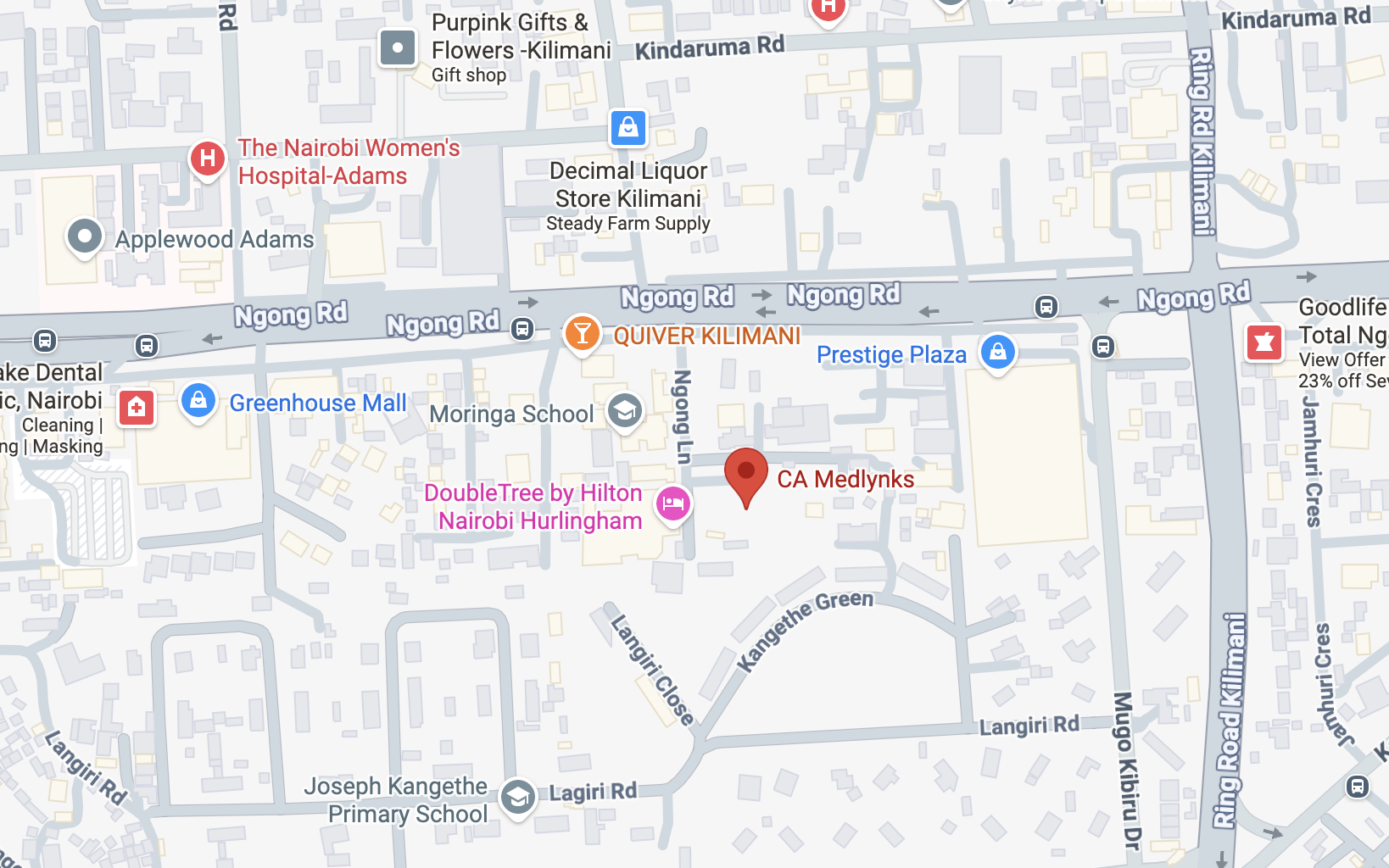
- Daykio Plaza, Ground Floor, off Ngong Lane, Kilimani, Nairobi
- Mon–Fri 8am–8pm · Sat 8am–5pm
Closed Sundays and public holidays - +254 741 669 175 (call or WhatsApp)
- On-site parking
This article is for general information only and does not replace professional medical advice, diagnosis, or treatment. Always speak to a qualified healthcare professional about your individual circumstances.
Frequently asked questions
How soon after unprotected sex can I get tested for STIs?
From 2 weeks for chlamydia and gonorrhoea, and 4 weeks for trichomonas and Mycoplasma genitalium. Blood tests for HIV, syphilis and hepatitis B pick up most infections from 6 weeks and give a reliable result at 3 months. If it has been less than 72 hours, ask about post-exposure prophylaxis (PEP) first.
Can I test for HIV 2 weeks after exposure?
Yes, but a negative result that early doesn't rule HIV out. Kenya's national guidelines advise testing when you first come in and again 4 weeks later. A rapid HIV test can take up to 3 months to pick up almost every infection, so a final test at 3 months gives the most certain answer.
I took PEP. When should I test for HIV?
Kenya's national guidelines advise an HIV test when you start PEP, again at 28 days and again at 12 weeks. PEP lowers the risk of HIV but can't guarantee protection, so keep these appointments.
Can I get an STI from oral sex?
Yes. Gonorrhoea, chlamydia, syphilis and herpes can pass on through oral sex, to the throat or the genitals. The risk of HIV from oral sex is very low. A urine test can miss a throat infection, so ask for a throat swab at your visit.
The condom broke. What should I do?
Treat it as sex without a condom. If it was less than 72 hours ago, ask about PEP today. If pregnancy is possible, get emergency contraception as soon as you can: most pills are meant to be taken within 3 days, and a copper coil (IUD) can be fitted up to 5 days after sex. Then follow the testing timeline on this page.
Should I wait to test if I have symptoms?
No. If you have discharge, burning when you pass urine, a sore or pain, see a doctor and test now. If the first result is negative, you may need another test later.
How much does STI testing cost in Nairobi?
At CA Medlynks, packages start at KES 5,000 for blood tests for HIV, syphilis and hepatitis B, and PCR panels start at KES 15,500. Platinum, at KES 30,000, checks eight infections in one visit.
Medically reviewed by
Written for patients by the CA Medlynks team and reviewed by the doctor below, following Kenya's 2026 national guidelines for HIV, STIs and viral hepatitis, and guidance from the World Health Organization (WHO) and the US Centers for Disease Control and Prevention (CDC). Last reviewed 19 October 2026; we review it at least once a year.

Dr. Paul Yonga
Medical Director and Infectious Disease Specialist
MBChB, MSPH, FRCP (Edin)
Sources
- Ministry of Health, Kenya, National AIDS and STI Control Programme (NASCOP). Integrated Guidelines for Prevention, Treatment and Management of HIV, Sexually Transmitted Infections and Viral Hepatitis, 2026 (Table 1.1: retesting after a recent exposure and after PEP).
- Centers for Disease Control and Prevention. Getting tested for HIV (window periods).
- Centers for Disease Control and Prevention. Antiretroviral postexposure prophylaxis after sexual, injection drug use, or other nonoccupational exposure to HIV. MMWR Recommendations and Reports, 2025.
- Centers for Disease Control and Prevention. How HIV spreads, and HIV risk and prevention estimates.
- Centers for Disease Control and Prevention. About STI risk and oral sex, and About genital HPV infection.
- World Health Organization. Sexually transmitted infections (STIs): fact sheet.
- World Health Organization. Emergency contraception: fact sheet.
- Brighton Sexual Health (University Hospitals Sussex NHS Foundation Trust). STI window periods: when to test.
- Centers for Disease Control and Prevention. Sexually Transmitted Infections Treatment Guidelines, 2021.
- NHS. Doing a pregnancy test.
- UN Women Africa. Kenya's national toll-free helpline 1195, 2024.