HIV Testing in Nairobi: Window Period, Accuracy and Cost

An HIV test is quick, but timing matters: a test taken too soon after a possible exposure can miss HIV. Here is when each test gives a reliable result, what it costs in Nairobi and what happens at your visit.
- Same-day doctor consultation
- Private and confidential
- Walk-ins welcome
The short answer
- Within 72 hours of a possible exposure: ask about PEP first.
- From 6 weeks: our lab HIV test (KES 2,200) gives a reliable result.
- At 3 months: a rapid test or a self-test gives a reliable result.
- Took PEP? Test at 28 days and again at 12 weeks.
- A reactive result (the test picked up possible signs of HIV) is always confirmed with more tests before HIV is diagnosed. With treatment, people with HIV live long, healthy lives.
When is an HIV test accurate?
Every HIV test has a window period: the time after infection before the test can pick up HIV. A negative result during the window period isn't final, so the kind of test decides when you can trust it.
PEP must start within 72 hours of a possible exposure. A lab HIV test on blood from a vein gives a reliable result from 6 weeks (45 days). A rapid finger-prick test shows most infections from about 6 weeks and gives a reliable result at 3 months (90 days). A self-test gives a reliable result at 3 months. If you took PEP, test when you start, at 28 days and a final time at 12 weeks.
Show as a table
| Test | Most infections show | Reliable result |
|---|---|---|
| PEP (not a test) | Start within 72 hours | |
| Lab test (blood from a vein) | 6 weeks | 6 weeks (45 days) |
| Rapid finger-prick test | 6 weeks | 3 months (90 days) |
| Self-test kit | – | 3 months (90 days) |
| Took PEP | Test when you start, at 28 days, and a final time at 12 weeks | |
Kenya's national guidelines advise an HIV test when you first come in after a recent exposure, and another 4 weeks later.
What your result means
Negative, after the window period
You don't have HIV, as long as you haven't had another possible exposure since.
Negative, but too soon
HIV isn't ruled out yet. Test again once the window period has passed, and use condoms until then.
Reactive
Not a diagnosis yet: more tests are needed to confirm it. What happens next
What about a viral load test? This test (listed as HIV RNA PCR) measures how much HIV is in the blood, and is mainly used to check how well treatment is working. It can find HIV sooner, 10 to 33 days after exposure, but it isn't the routine test for diagnosing HIV in adults, and you would still need a standard test after the window period. Ask our doctor whether it suits your situation.
HIV test cost in Nairobi (2026 prices)
| Test | KES |
|---|---|
| Lab HIV testA fourth-generation test on blood from a vein, which checks for both antigen and antibodies. Reliable from 6 weeks. Results in about 4 hours | 2,200 |
| Rapid HIV test on its ownFinger-prick. Reliable at 3 months. Results in about 1 hour | 1,600 |
| Bronze packageRapid HIV test (reliable at 3 months), syphilis and hepatitis B. Results the same day. KES 6,500 with a doctor's consultation | 5,000 |
| Platinum packageRapid HIV test (reliable at 3 months) and seven other infections. Results in 48 hours. KES 35,000 with a doctor's consultation | 30,000 |
| HIV viral load (RNA PCR)Mainly to check treatment. Results in 48 hours | 9,300 |
| PEPBronze with a doctor's consultation includes the consultation, a rapid HIV test, syphilis and hepatitis B tests, and all 28 days of tablets | 6,500 |
Bronze and Platinum use a rapid HIV test. For a reliable result from 6 weeks, ask for our lab HIV test. Pay after your test by M-Pesa, cash, Visa or Mastercard. Platinum also tests for other sexually transmitted infections (STIs): see every package in our guide to STI testing in Nairobi.
Free HIV testing is available at government health facilities and some non-profit clinics, and HIV self-test kits are sold in pharmacies. A reactive self-test must be confirmed at a clinic. At CA Medlynks, you can also see a doctor the same day, start PEP and test for other STIs in one visit.
Not sure which test you need? Message us on WhatsApp and our medical staff will help you choose.
Your visit, step by step
Message or walk in
Book on WhatsApp or by phone, or just walk in (Mon–Fri 8am–8pm, Sat 8am–5pm).
A private chat
A nurse asks a few questions, including when the possible exposure was, to choose the right test and check whether you need PEP.
A quick sample
A finger-prick for a rapid test, or blood from a vein for the lab test. The visit takes about 20 minutes.
Your result
By WhatsApp, email or in person, as you choose. A positive HIV result is always given in person, by a doctor, in a private room.
- Bring an identity card or passport for our records. Testing can't be anonymous, but your details stay confidential.
- No need to fast. Eat and drink normally.
- Under 18? Please call or WhatsApp us on +254 741 669 175 before you visit.
If your HIV test is reactive
A single reactive test isn't a diagnosis yet: more tests are needed to confirm it. If a self-test is reactive, come in as soon as you can. This is what happens next, following Kenya's national guidelines. You won't be judged.
-
More tests to confirm
HIV is diagnosed only if three different tests are all reactive. After a rapid test, this happens at the same visit.
Results disagree? Test again after 14 days.
-
A doctor tells you in person
In a private room, never by chat or email, with time for your questions and to think about who can support you.
-
Linked to HIV care
We connect you with an HIV care clinic (a comprehensive care centre). Before treatment starts, a different health worker repeats the test to make sure the result is right.
-
Treatment starts
HIV treatment, called antiretroviral therapy (ART), can start the same day and should start within 2 weeks.
-
Undetectable = untransmittable
With treatment taken as prescribed, most people reach an undetectable viral load within 6 months. While it stays undetectable, checked with regular viral load tests, HIV isn't passed on through sex.
Partners can test too. With your written consent, we can help you tell them, or contact them for you without giving your name.
Preventing HIV: PEP and PrEP
PEP is taken after a possible exposure. Pre-exposure prophylaxis (PrEP) is taken before, by people at ongoing risk.
PEP: after a possible exposure
- When
- Start within 72 hours, the sooner the better.
- How
- Tablets every day for 28 days.
- HIV tests
- When you start, at 28 days and at 12 weeks, at a clinic rather than with a self-test.
- With us
- Started after a quick HIV test, during opening hours.
PrEP: before, for ongoing risk
- Who
- For example, if a partner has HIV and their viral load is detectable or unknown, if you don't always use condoms, or if you've had an STI in the last 6 months.
- How
- A daily pill or a long-acting injection. It greatly lowers the risk of HIV when taken as prescribed.
- HIV tests
- Before you start, then regularly while you take it.
- With us
- Our doctor first checks that it's right for you, with an HIV test, counselling and blood tests for your liver and kidneys. The cost depends on the tests you need at this first visit. We order injectable PrEP in for you.
PEP and PrEP don't protect against other STIs. Condoms lower the risk of HIV and most other STIs.
HIV symptoms and how HIV spreads
HIV (human immunodeficiency virus) attacks the immune system. It is still common in Kenya: about 1.3 million people live with it, and there were almost 20,000 new infections in 2024.
Early symptoms
About 2 to 4 weeks after infection, many people (about 2 in 3) get a flu-like illness that lasts a few days to a few weeks:
After that, HIV often causes no symptoms for years. Only a test can tell you whether you have HIV.
How HIV spreads
Through blood, semen, vaginal fluids and breast milk. Most people get HIV through vaginal or anal sex without a condom, or by sharing needles. It can also pass from a mother to her baby.
HIV doesn't spread through:
Get an HIV test at CA Medlynks
Rapid and lab HIV tests, PEP and PrEP, with a same-day doctor consultation.
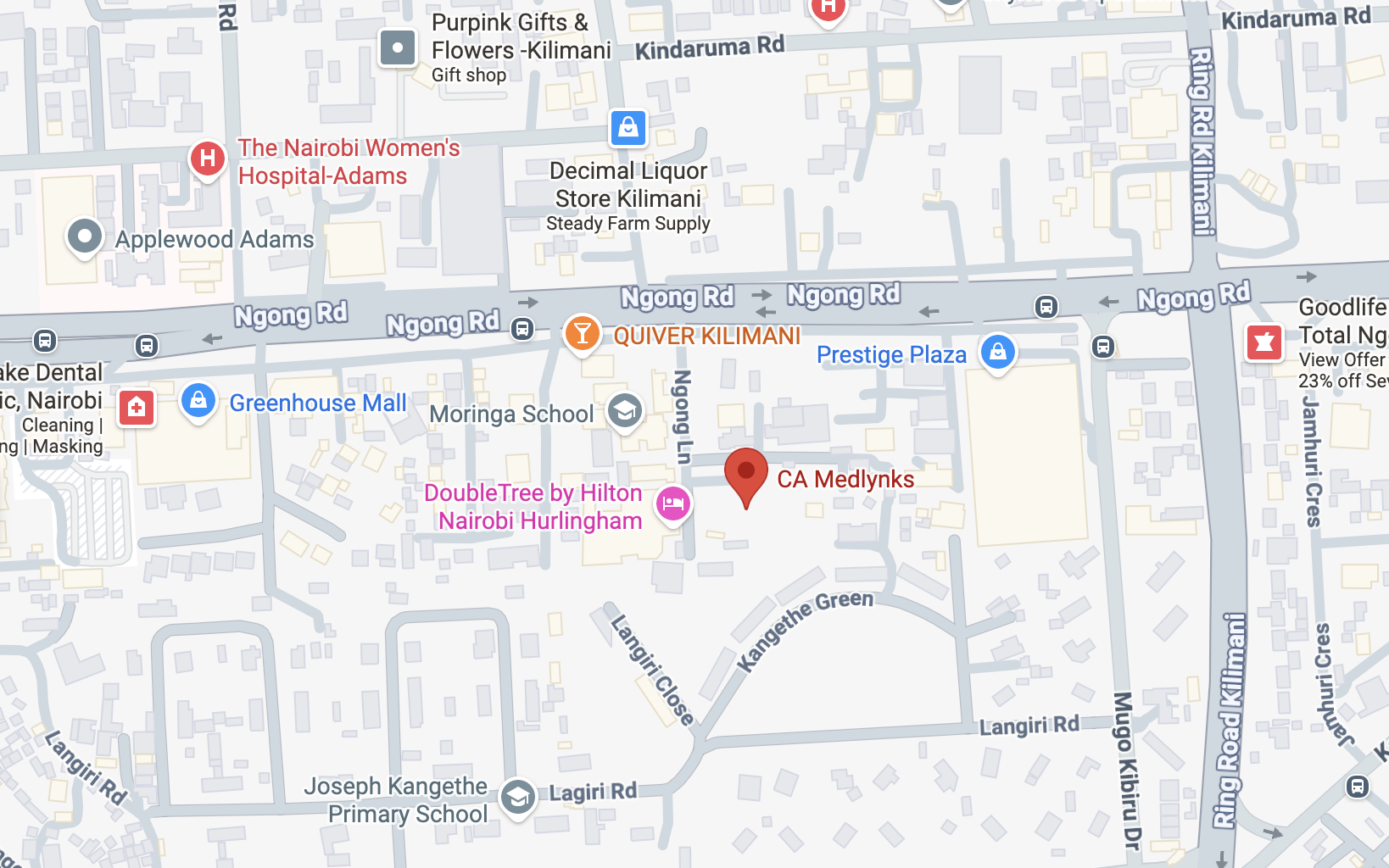
- Daykio Plaza, Ground Floor, off Ngong Lane, Kilimani, Nairobi
- Mon–Fri 8am–8pm · Sat 8am–5pm
Closed Sundays and public holidays - +254 741 669 175 (call or WhatsApp)
- On-site parking
This article is for general information only and does not replace professional medical advice, diagnosis, or treatment. Always speak to a qualified healthcare professional about your individual circumstances.
Frequently asked questions
How much does an HIV test cost in Nairobi?
At CA Medlynks, a rapid HIV test on its own costs KES 1,600, with the result in about an hour, and our lab HIV test costs KES 2,200. The Bronze package (KES 5,000, or KES 6,500 with a doctor's consultation) adds syphilis and hepatitis B to a rapid HIV test, with results the same day. Free HIV testing is also available at government health facilities.
How soon after exposure is an HIV test accurate?
If the exposure was less than 72 hours ago, ask about PEP first. A negative result is reliable from 6 weeks (45 days) with our lab test, and at 3 months with a rapid test or a self-test. If you took PEP, test at 28 days and again at 12 weeks.
Can I test for HIV 2 weeks after exposure?
Yes, but a negative result that early doesn't rule HIV out. Kenya's national guidelines advise testing now and again 4 weeks later, which is 6 weeks after the exposure. If that second test is our lab test and it is negative, you can rely on it. After a rapid test, test again at 3 months.
How accurate is a rapid HIV test?
Rapid tests are accurate once the window period has passed: a negative result 3 months after the exposure is reliable. A single reactive result isn't a diagnosis. It is always confirmed with more tests, following Kenya's national testing steps.
I took PEP. When should I test for HIV?
Kenya's national guidelines advise an HIV test when you start PEP, again at 28 days and again at 12 weeks. PEP lowers the risk of HIV but can't guarantee protection, so keep these appointments.
What happens if my HIV test is positive?
A doctor explains the result in person, in a private room. HIV is diagnosed only when three different tests are reactive, and a different health worker checks the result again before treatment starts. We connect you with an HIV care clinic, where treatment can start the same day and should start within 2 weeks. With treatment, people with HIV live long, healthy lives.
Is HIV testing confidential?
Yes. Your result goes only to you, by WhatsApp, email or in person, as you choose, and a positive HIV result is always given in person. Nothing is shared with your employer, family or partner without your written consent. We ask for an identity card or passport for our records, so testing can't be anonymous.
Can HIV spread through kissing or sharing food?
No. HIV isn't passed on through saliva, kissing, hugging or sharing food. It spreads through blood, semen, vaginal fluids and breast milk, mostly through sex without a condom or sharing needles.
Medically reviewed by
Written for patients by the CA Medlynks team and reviewed by the doctor below, following Kenya's 2026 national guidelines for HIV, STIs and viral hepatitis, and guidance from the World Health Organization (WHO) and the US Centers for Disease Control and Prevention (CDC). Last reviewed 22 October 2026; we review it at least once a year.
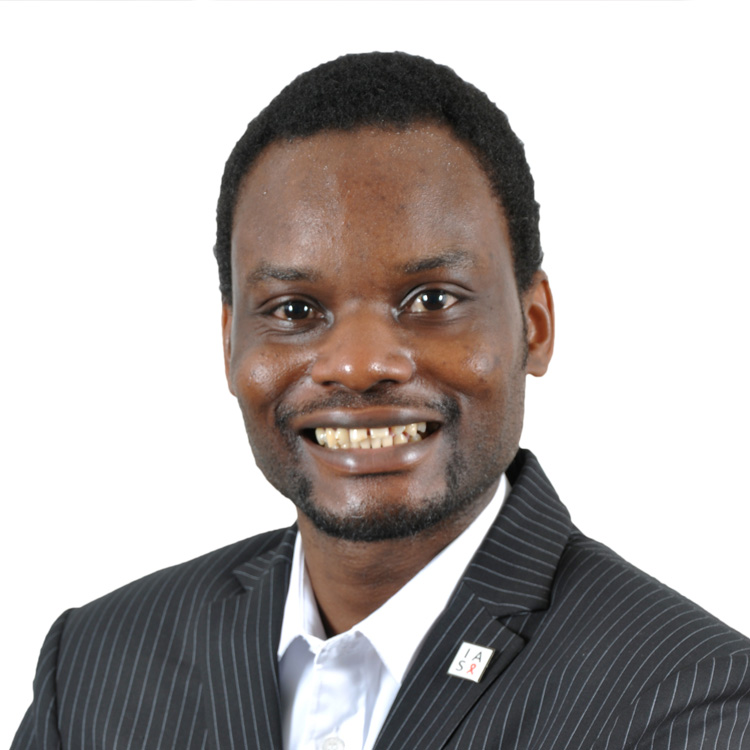
Dr. Paul Yonga
Medical Director and Infectious Disease Specialist
MBChB, MSPH, FRCP (Edin)
Sources
- Ministry of Health, Kenya, National AIDS and STI Control Programme (NASCOP). Integrated Guidelines for Prevention, Treatment and Management of HIV, Sexually Transmitted Infections and Viral Hepatitis, 2026 (retesting after a recent exposure and after PEP, PEP, PrEP and starting treatment).
- NASCOP. Kenya HIV Testing Services Operational Manual, 2022 (the national testing steps and HIV self-testing).
- National Syndemic Diseases Control Council. Kenya AIDS Progress Report 2025.
- Centers for Disease Control and Prevention. Getting tested for HIV (window periods).
- Centers for Disease Control and Prevention. Antiretroviral postexposure prophylaxis after sexual, injection drug use, or other nonoccupational exposure to HIV. MMWR Recommendations and Reports, 2025.
- Centers for Disease Control and Prevention. Preventing HIV with PrEP.
- Centers for Disease Control and Prevention. HIV treatment as prevention.
- Centers for Disease Control and Prevention. How HIV spreads.
- World Health Organization. HIV and AIDS: fact sheet.
- HIV.gov (US Department of Health and Human Services). Symptoms of HIV.
- UN Women Africa. Kenya's national toll-free helpline 1195, 2024.